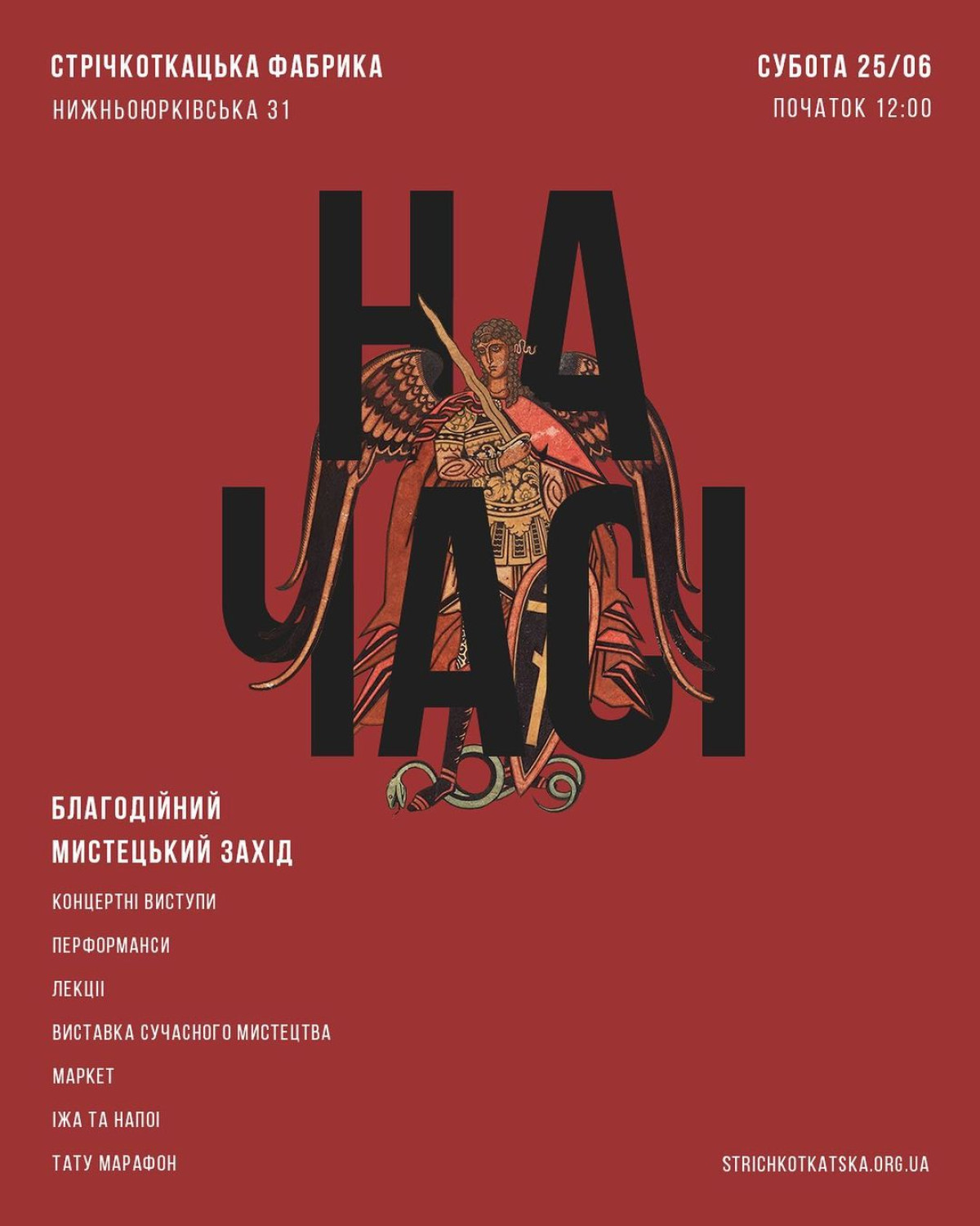
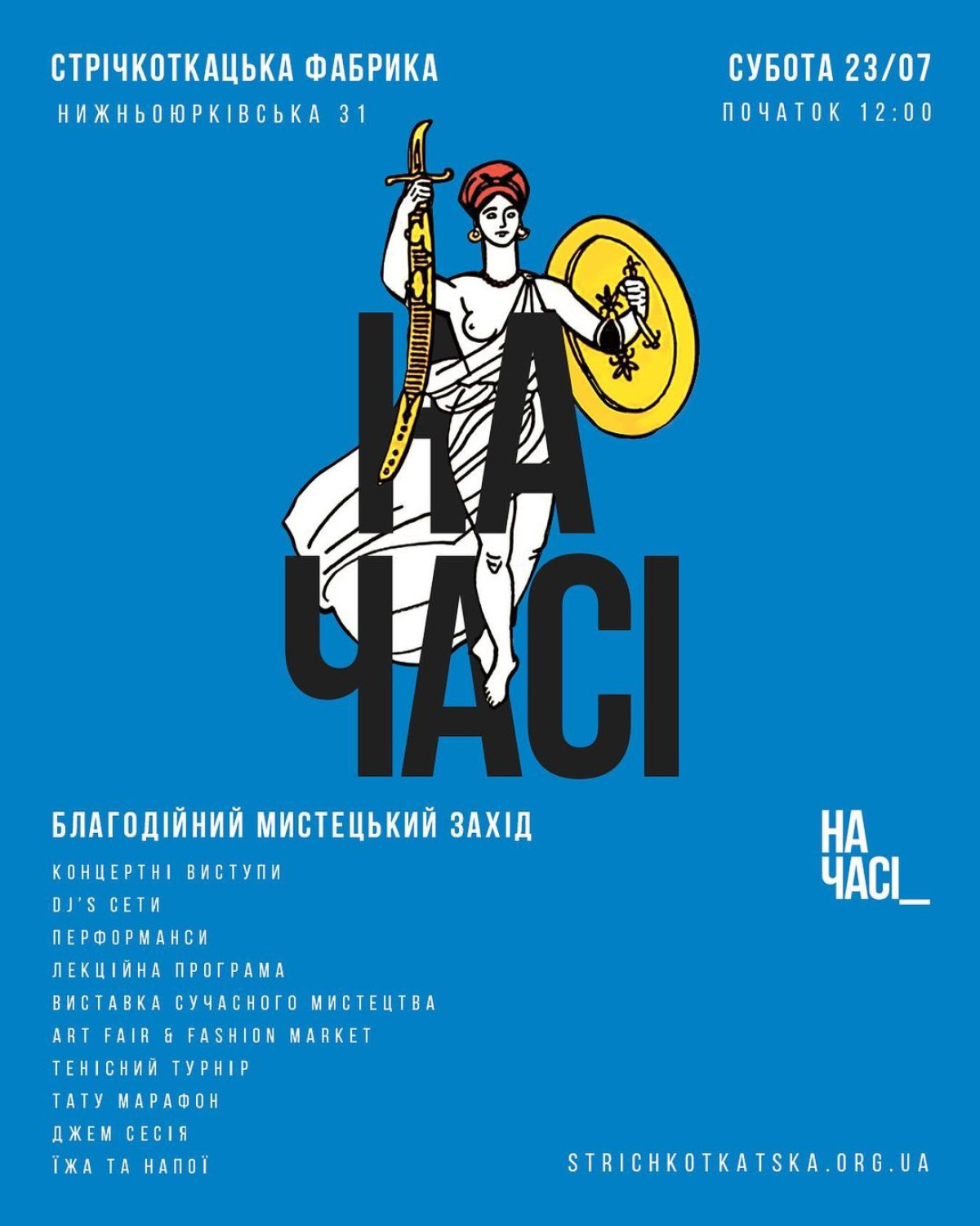
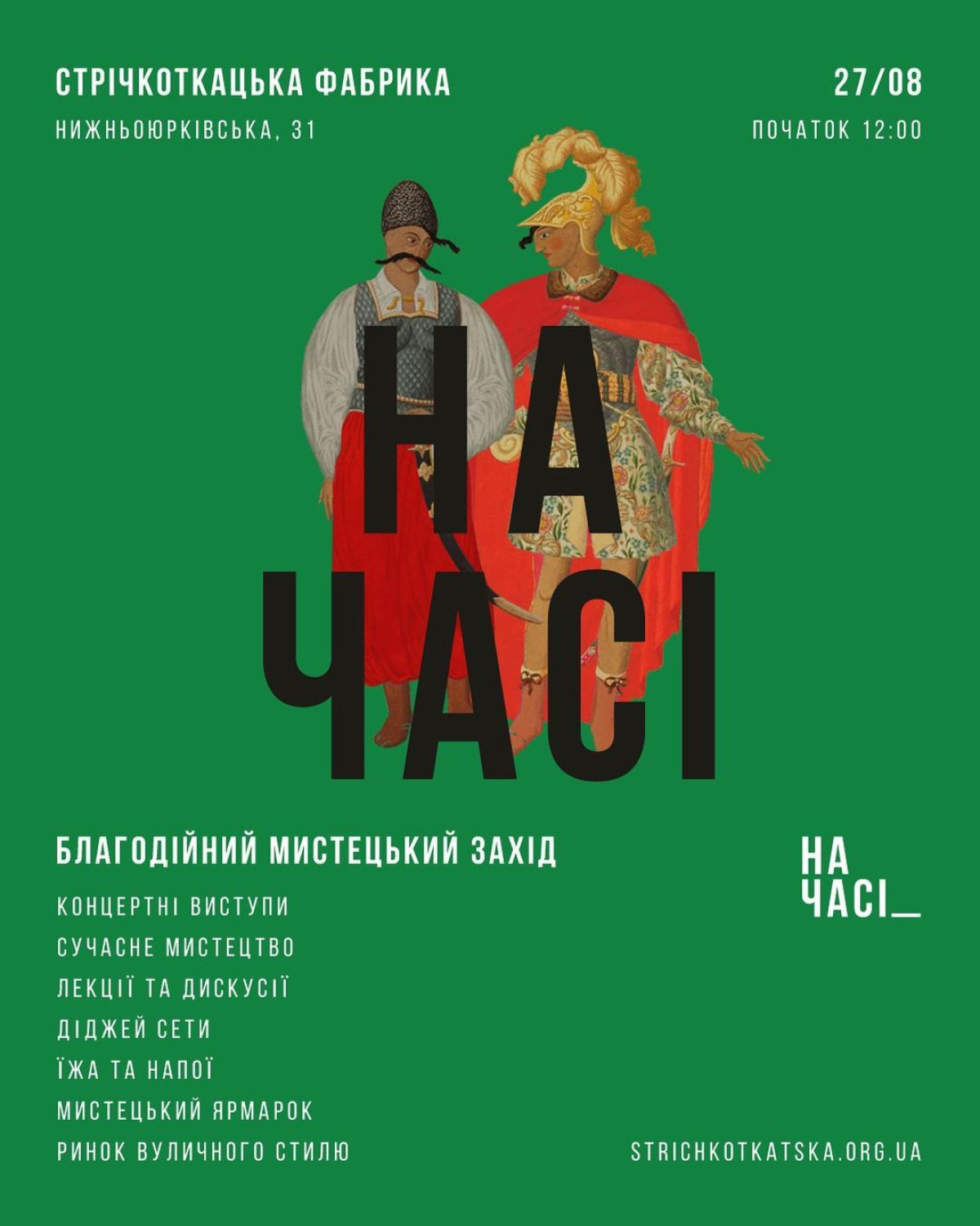
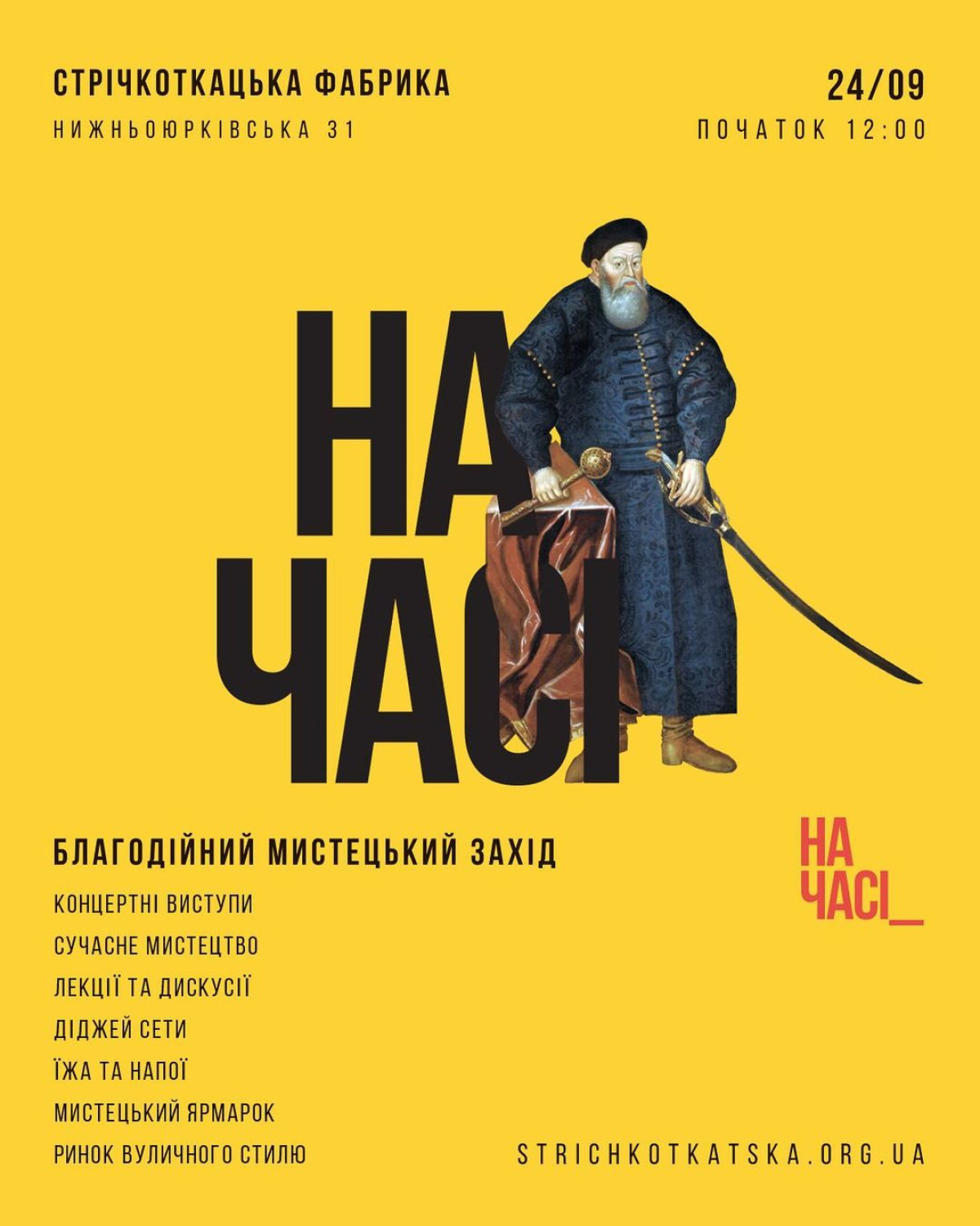
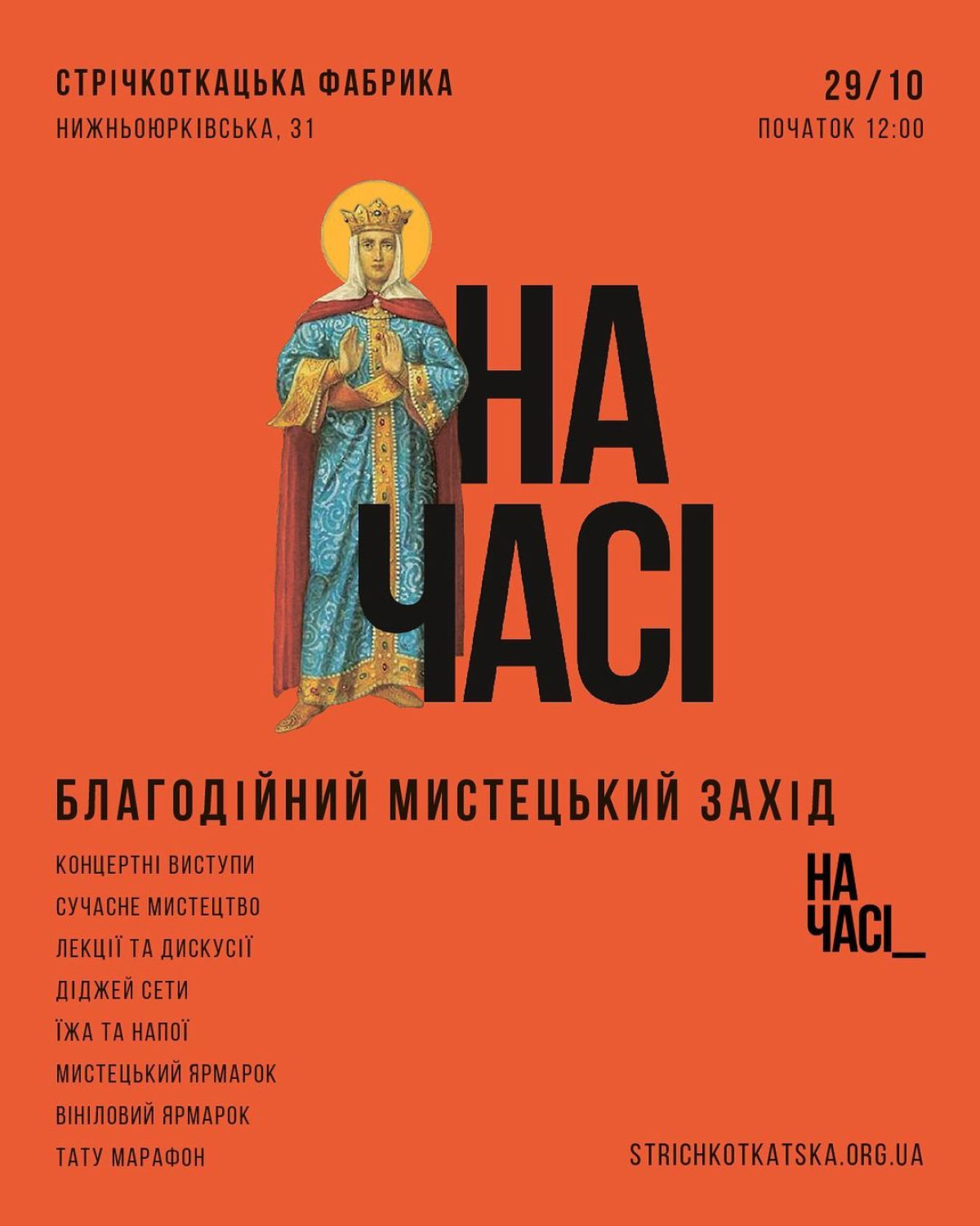
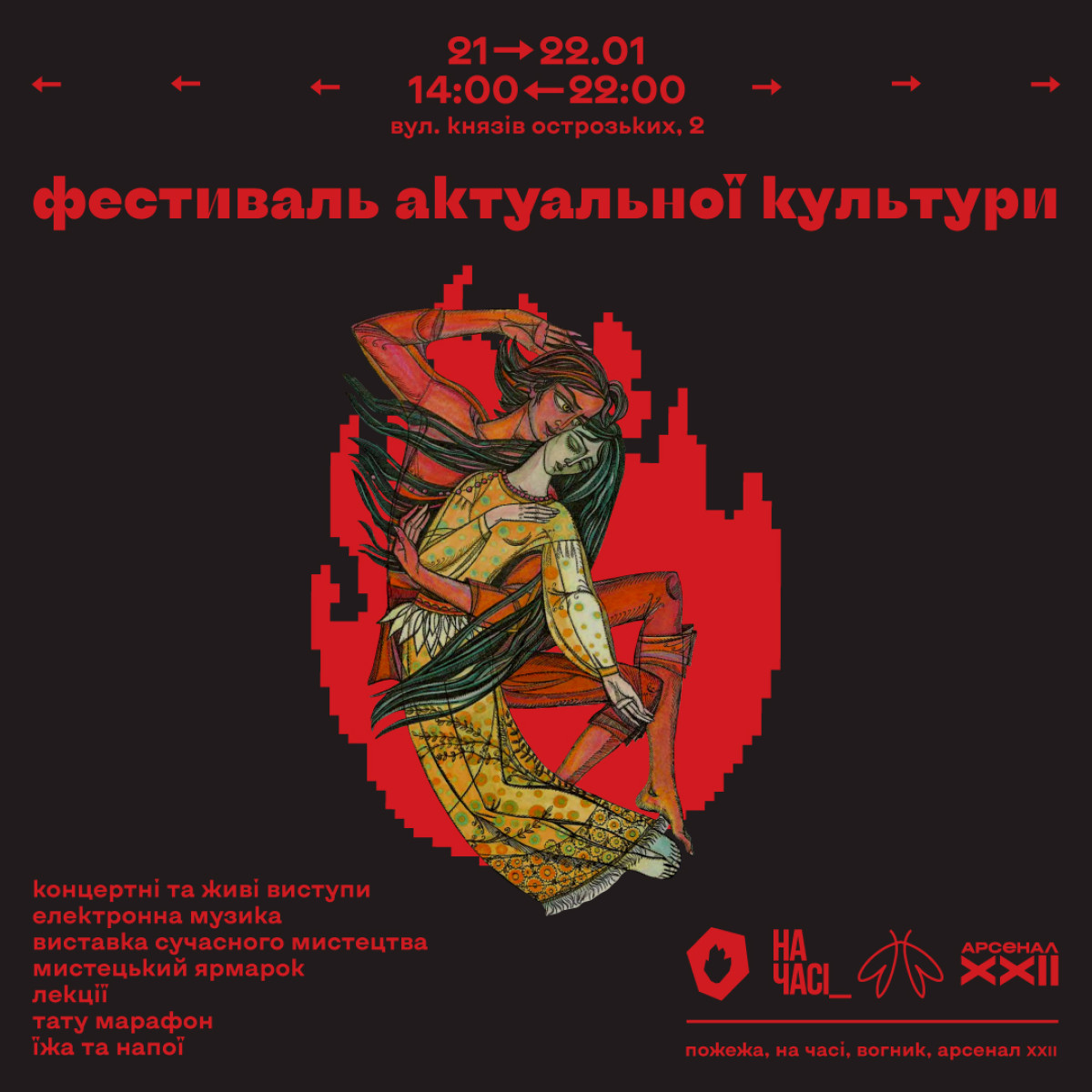
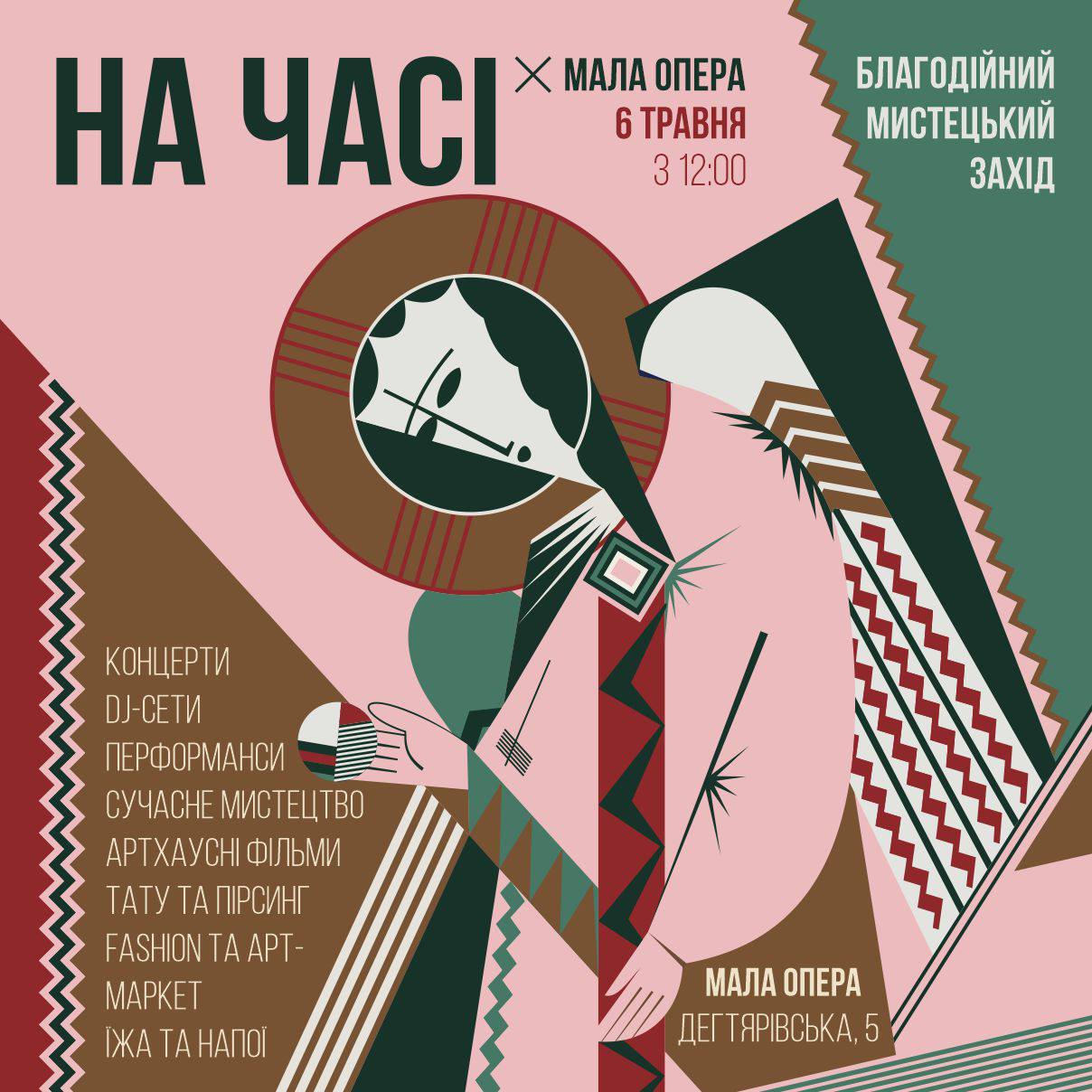
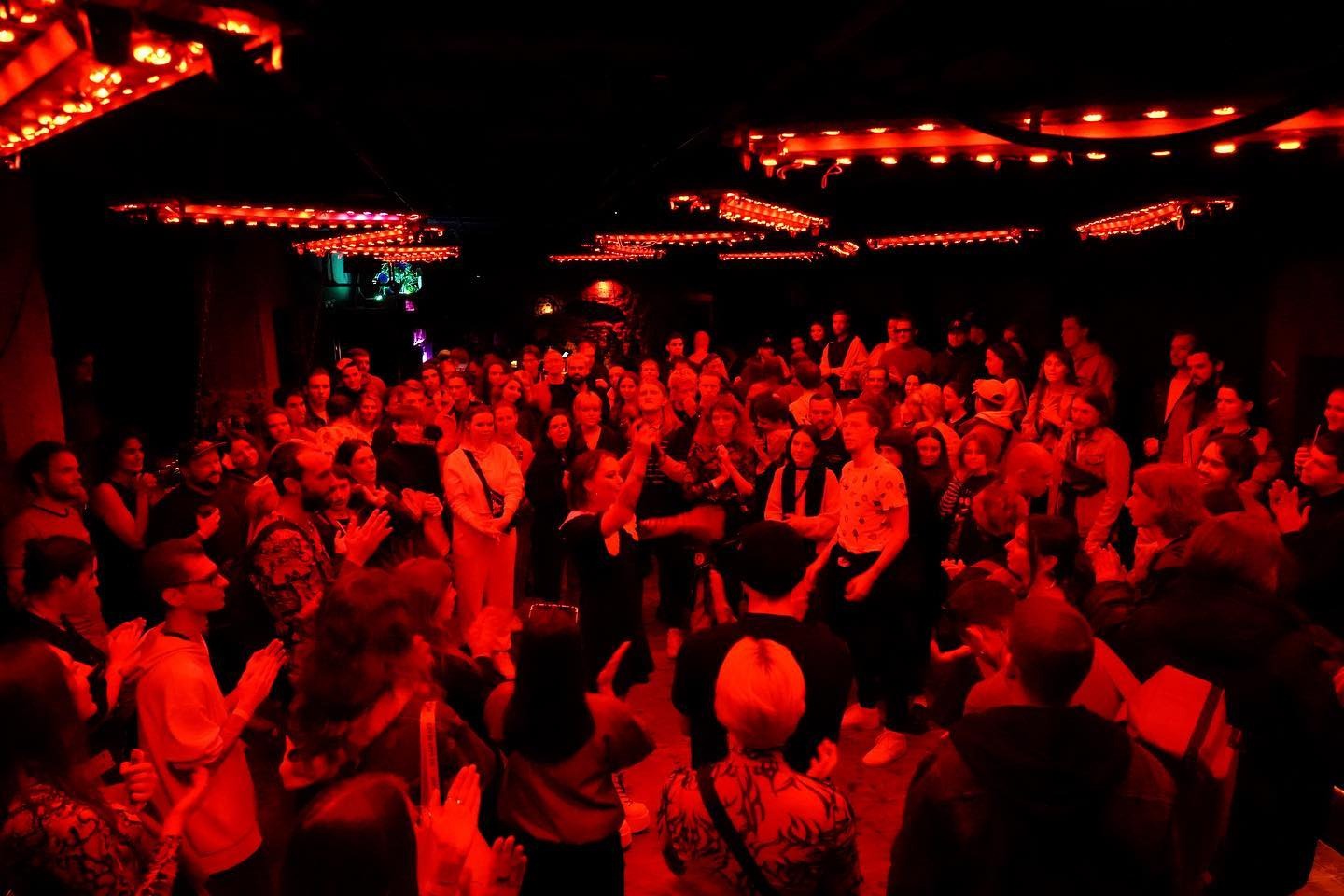
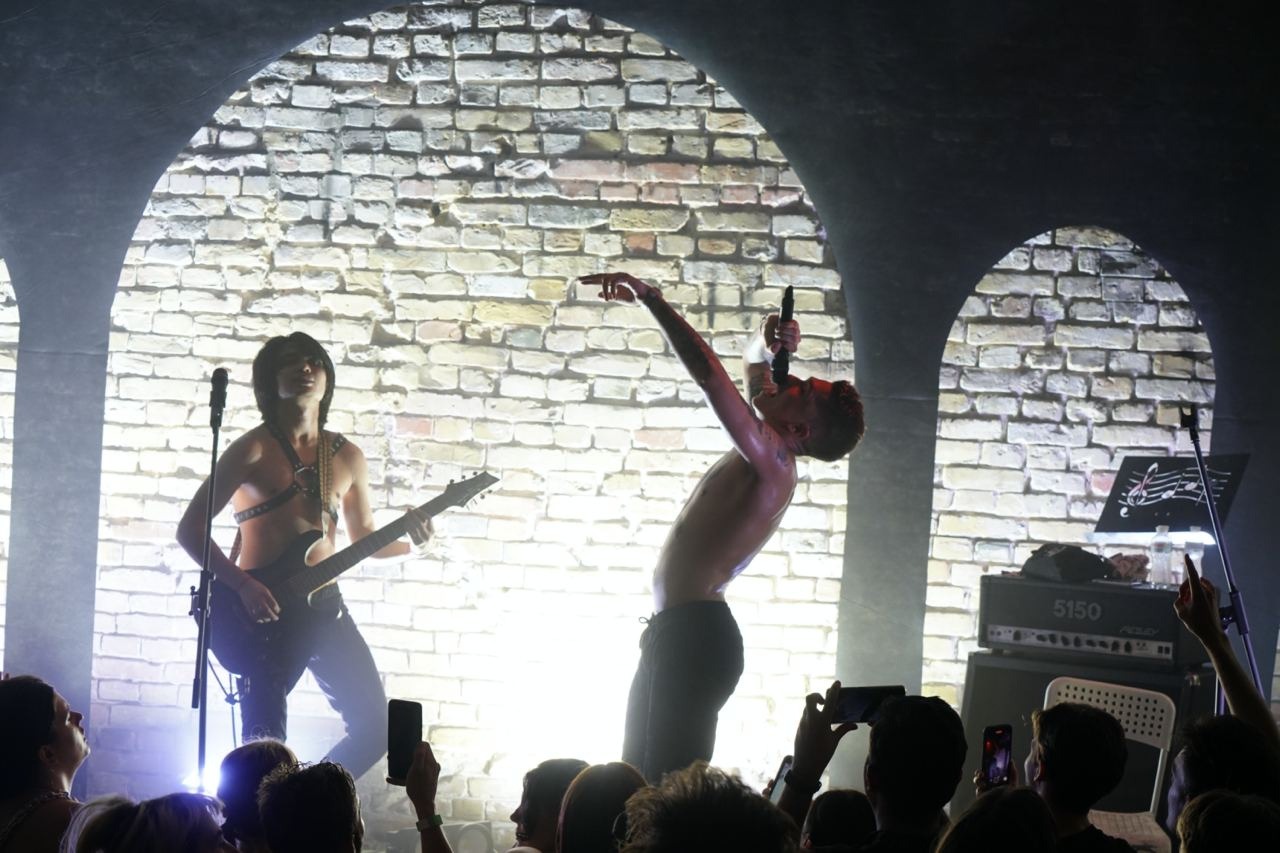
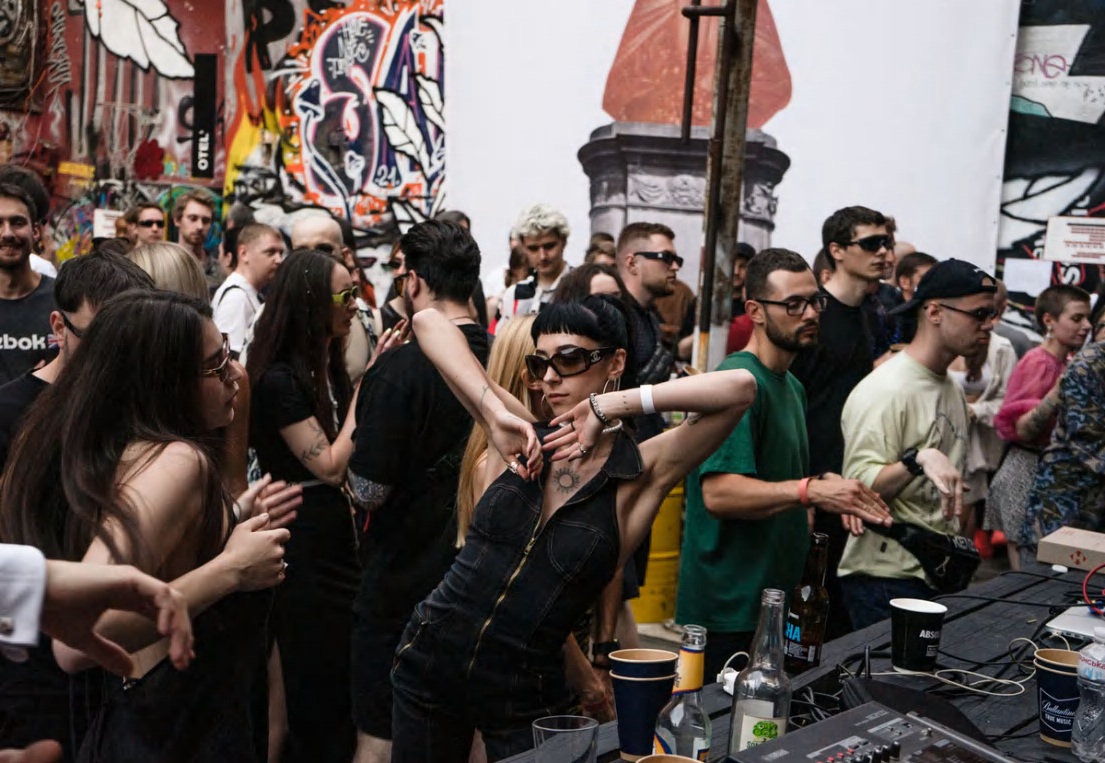
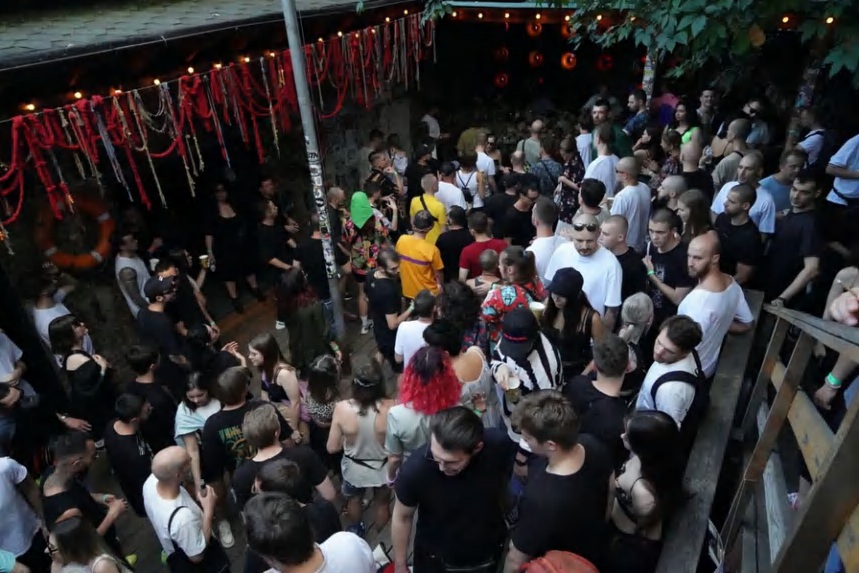
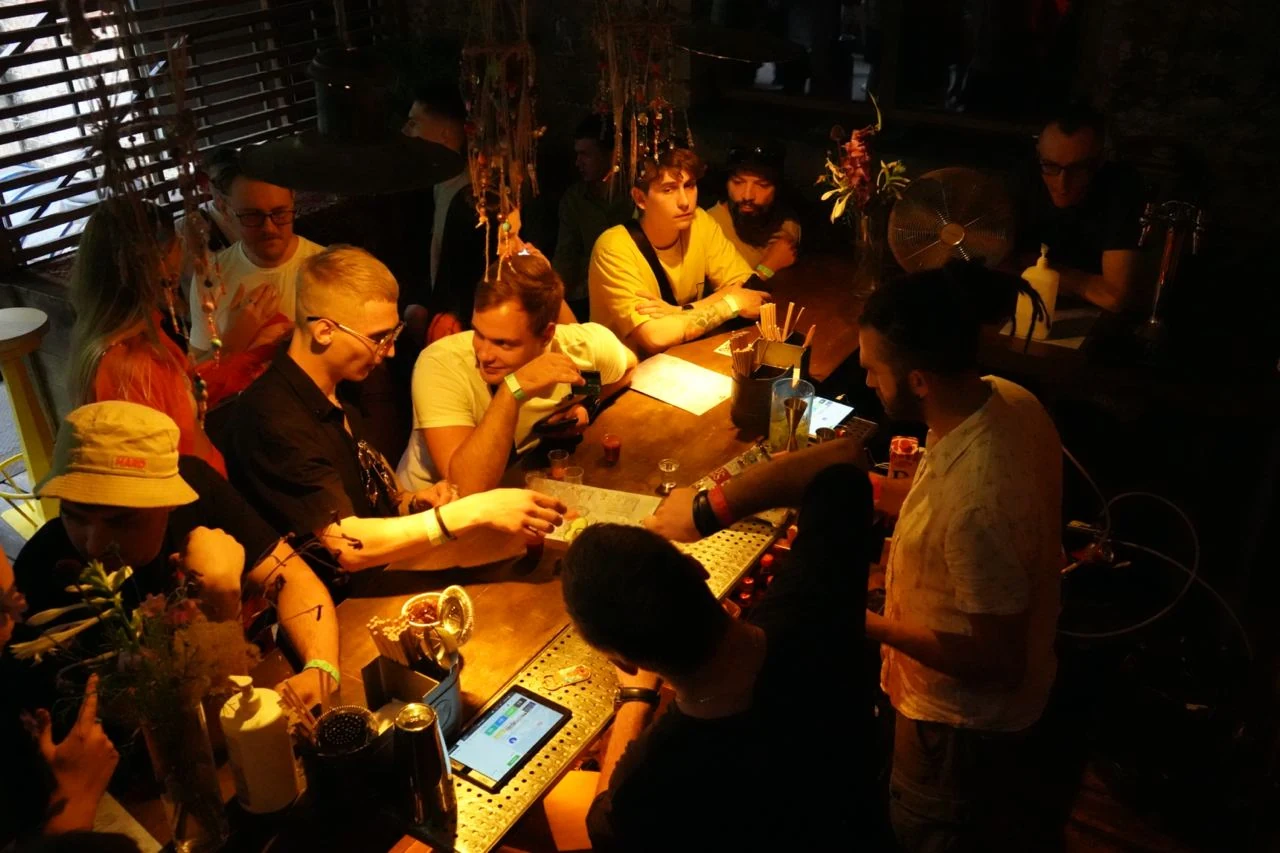
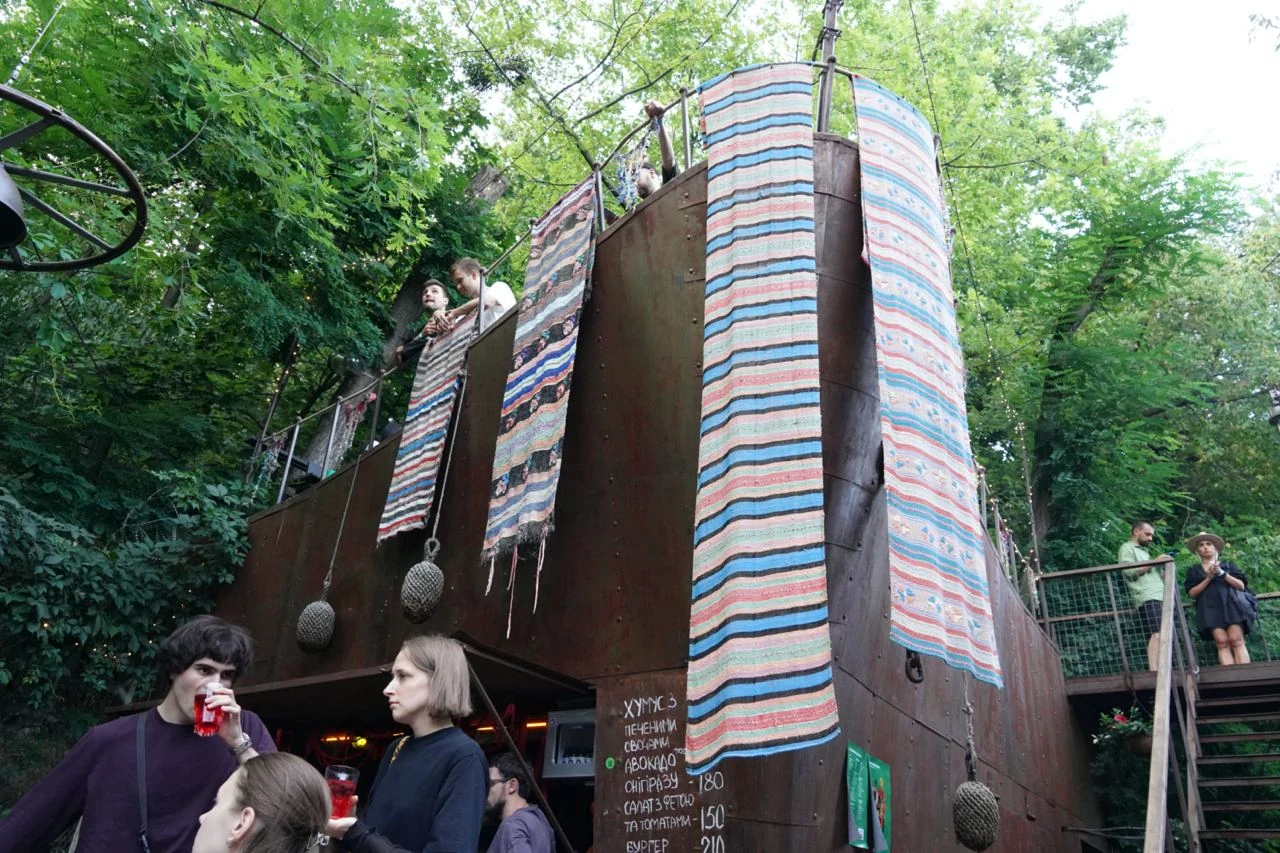
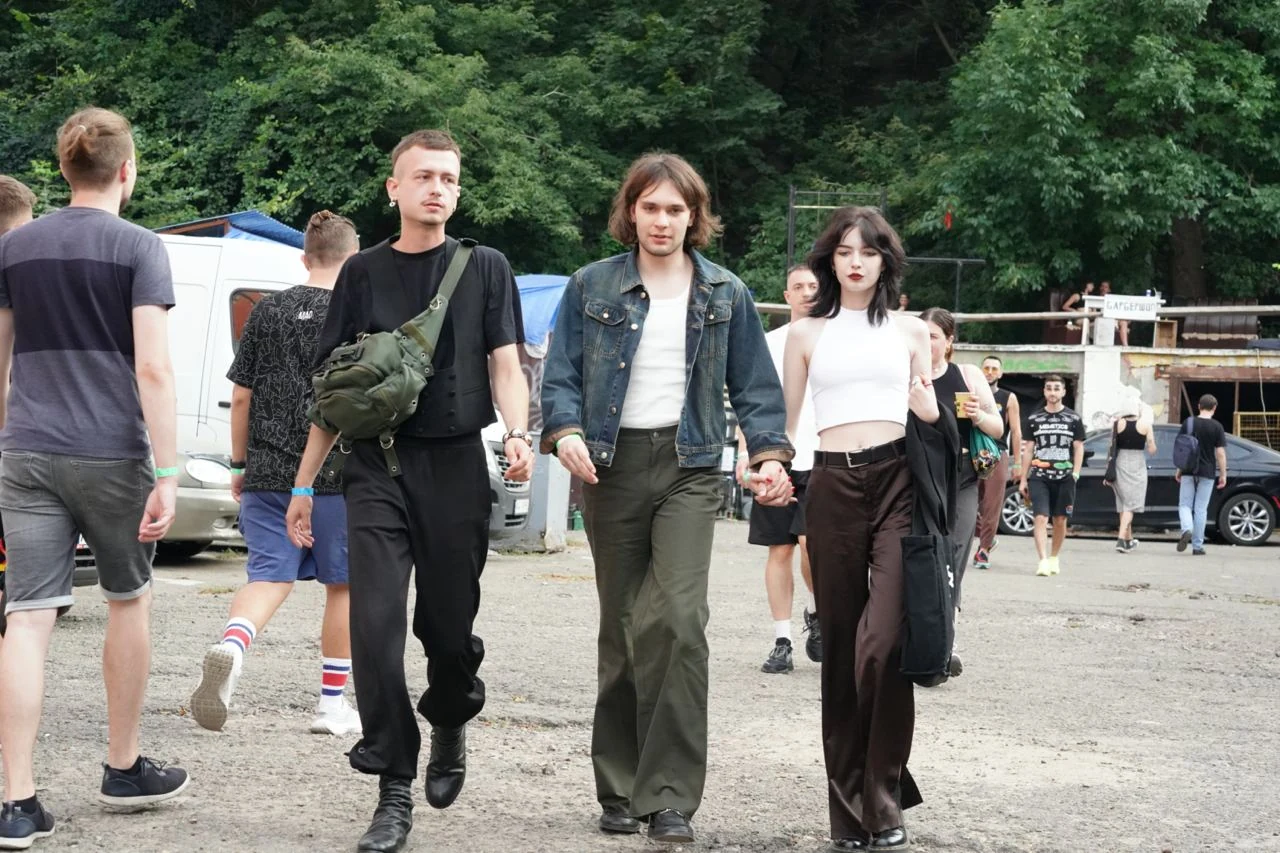
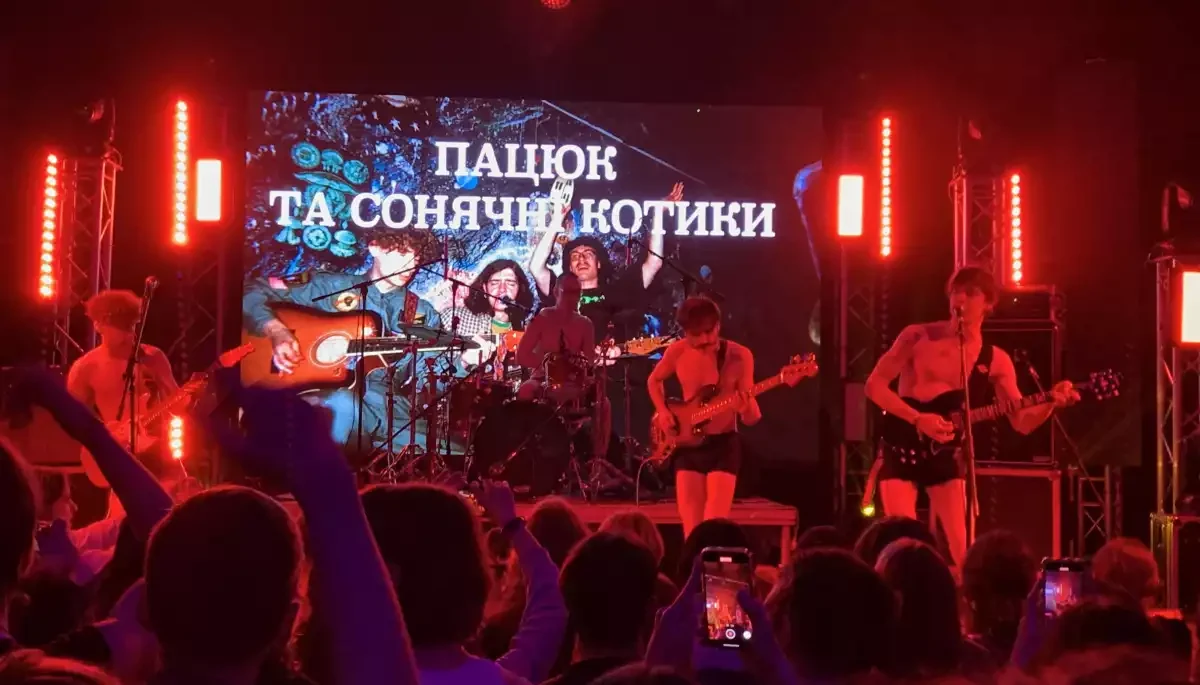
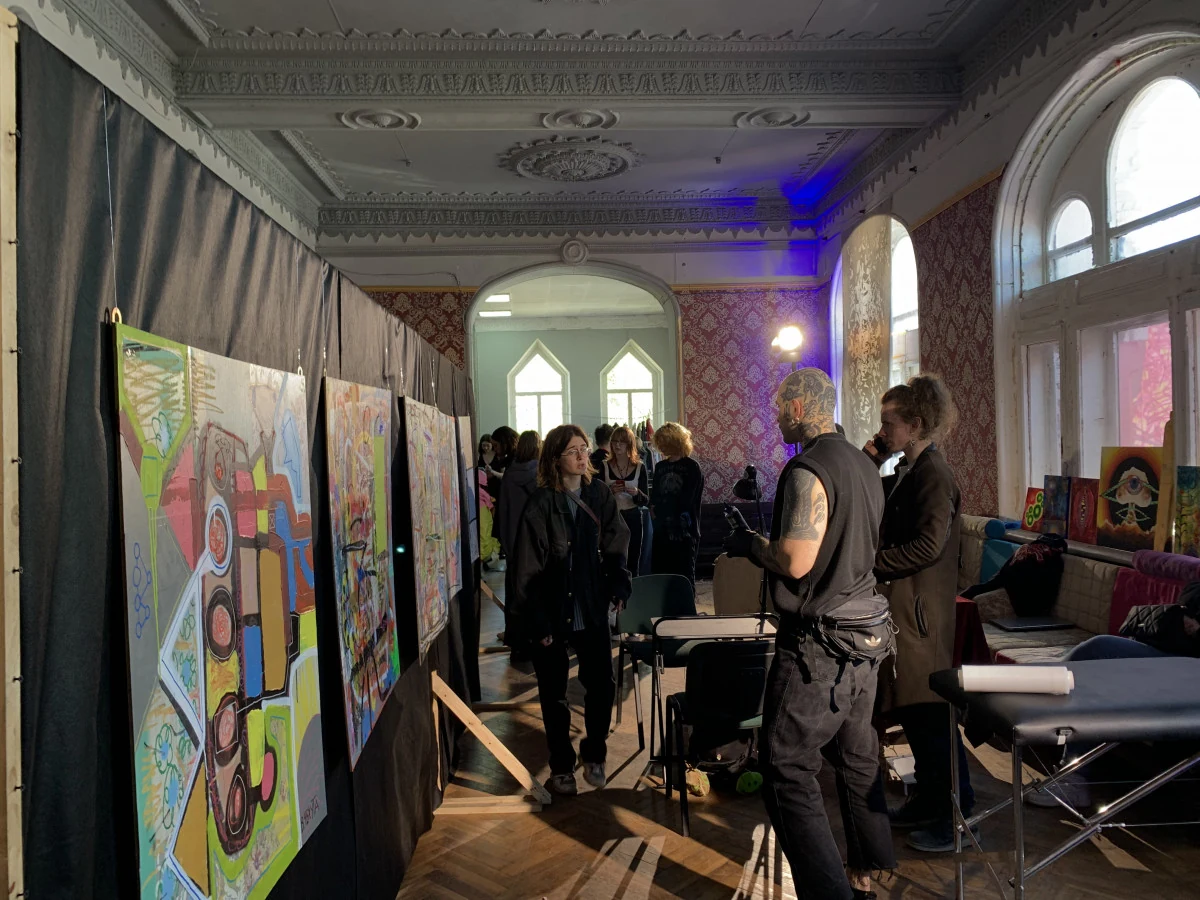
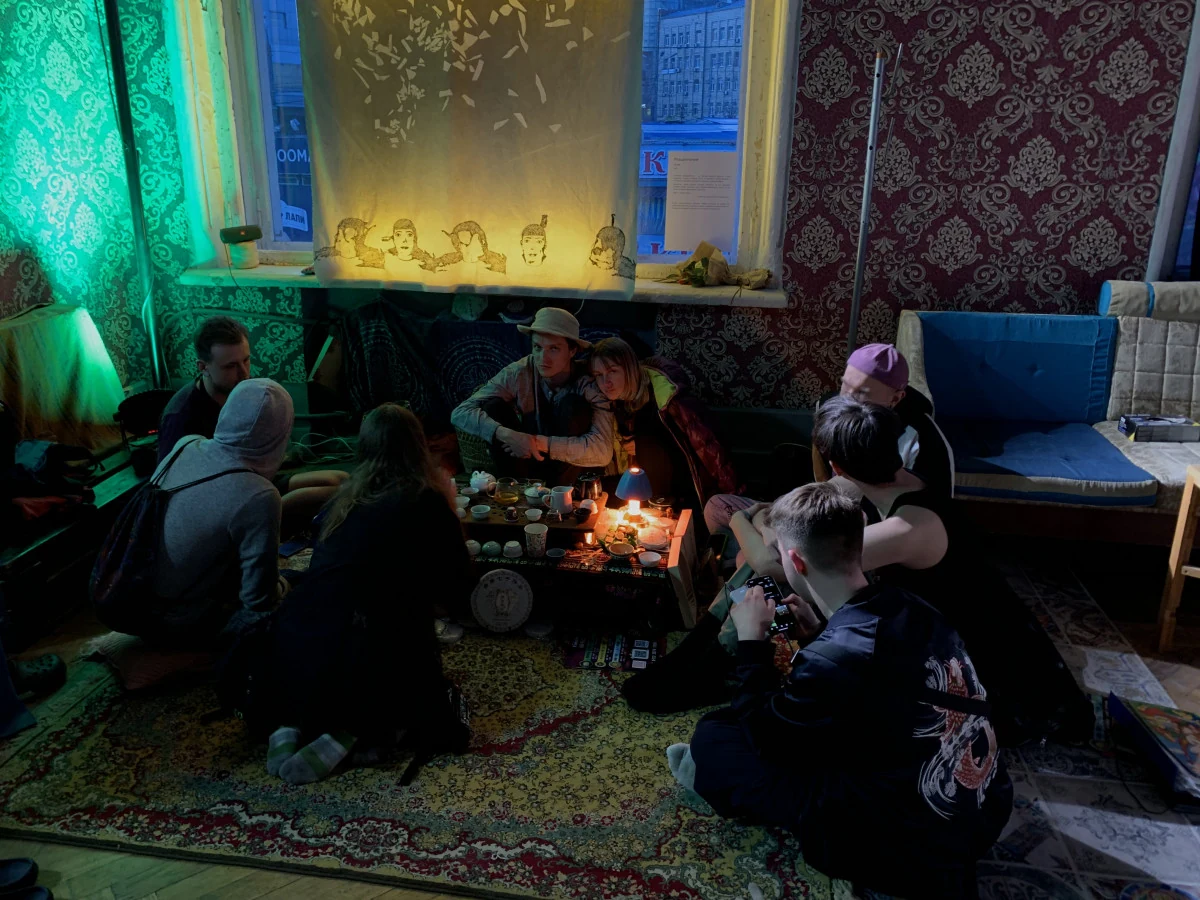
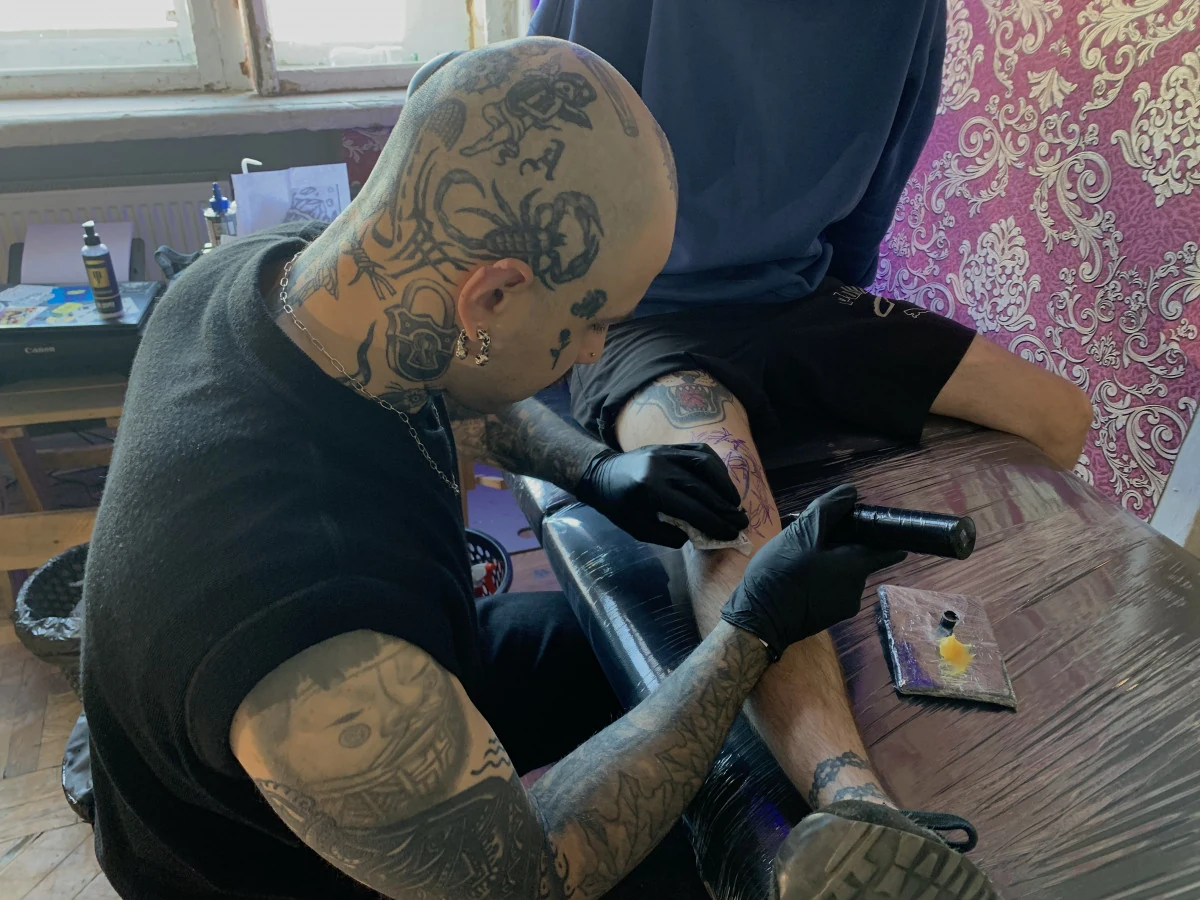
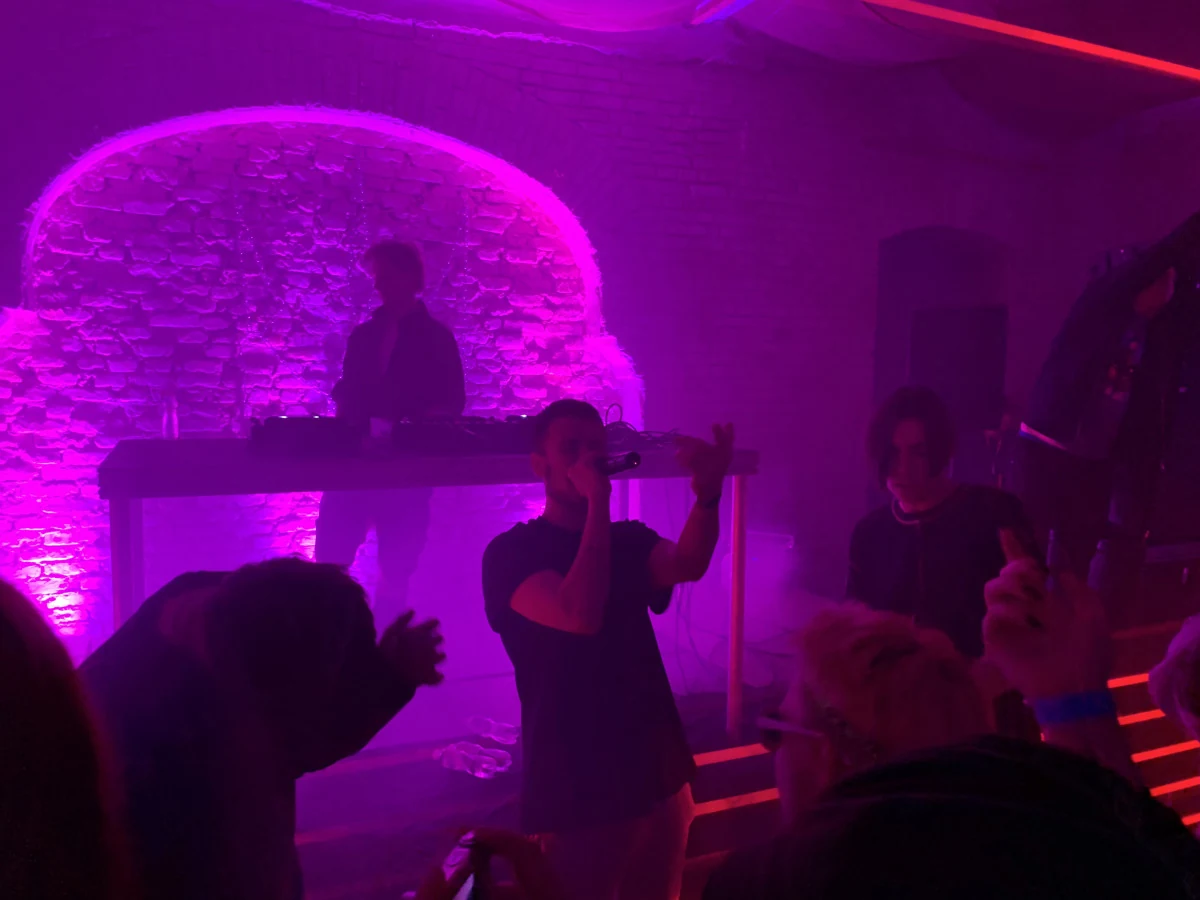
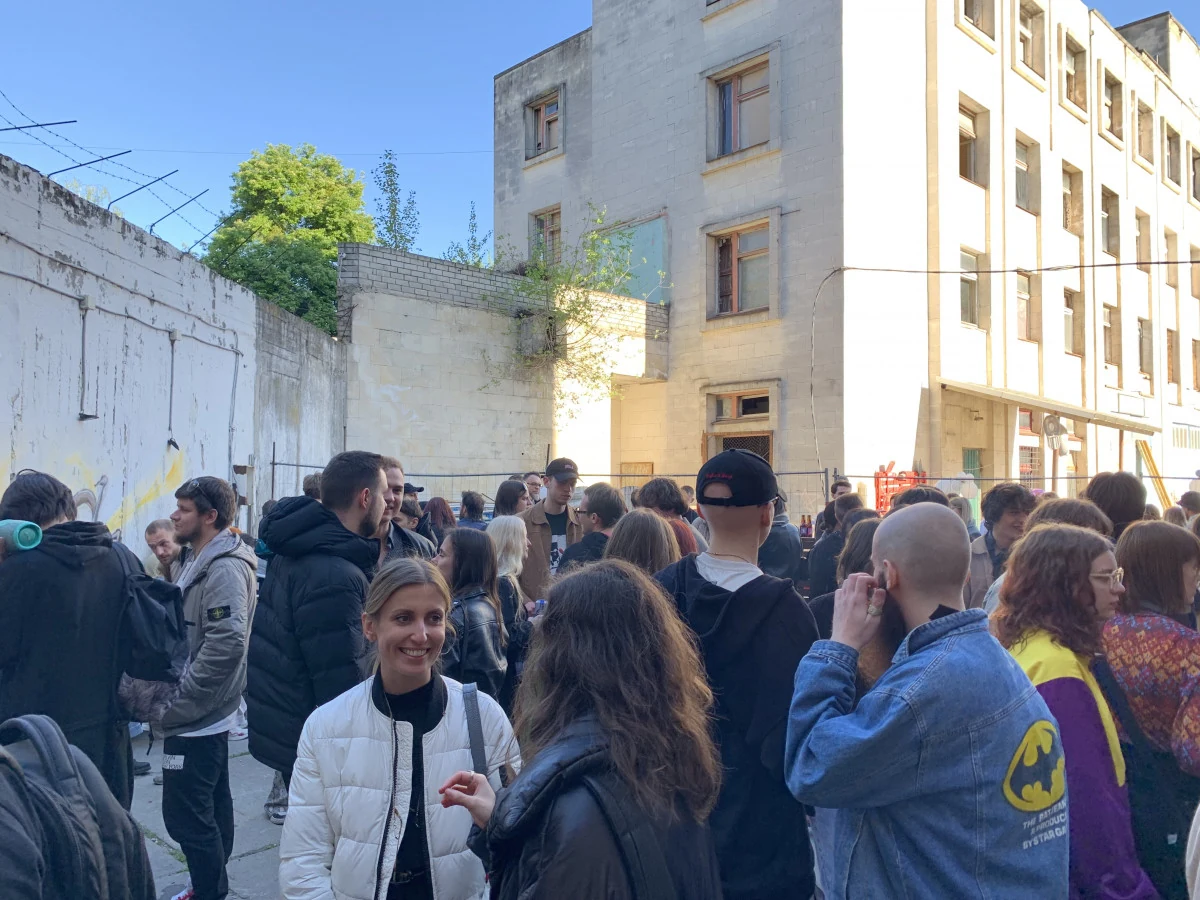
Na Chasi emerged in the first months after the liberation of the Kyiv region, as the city was learning to become a place of encounter again. The project’s name, meaning “now is the time”, answered the familiar phrase “not now” — the tendency to postpone culture until circumstances improve. I wanted to create a space where artists, musicians and audiences could resume a living dialogue, reflect on what they had experienced and support one another.
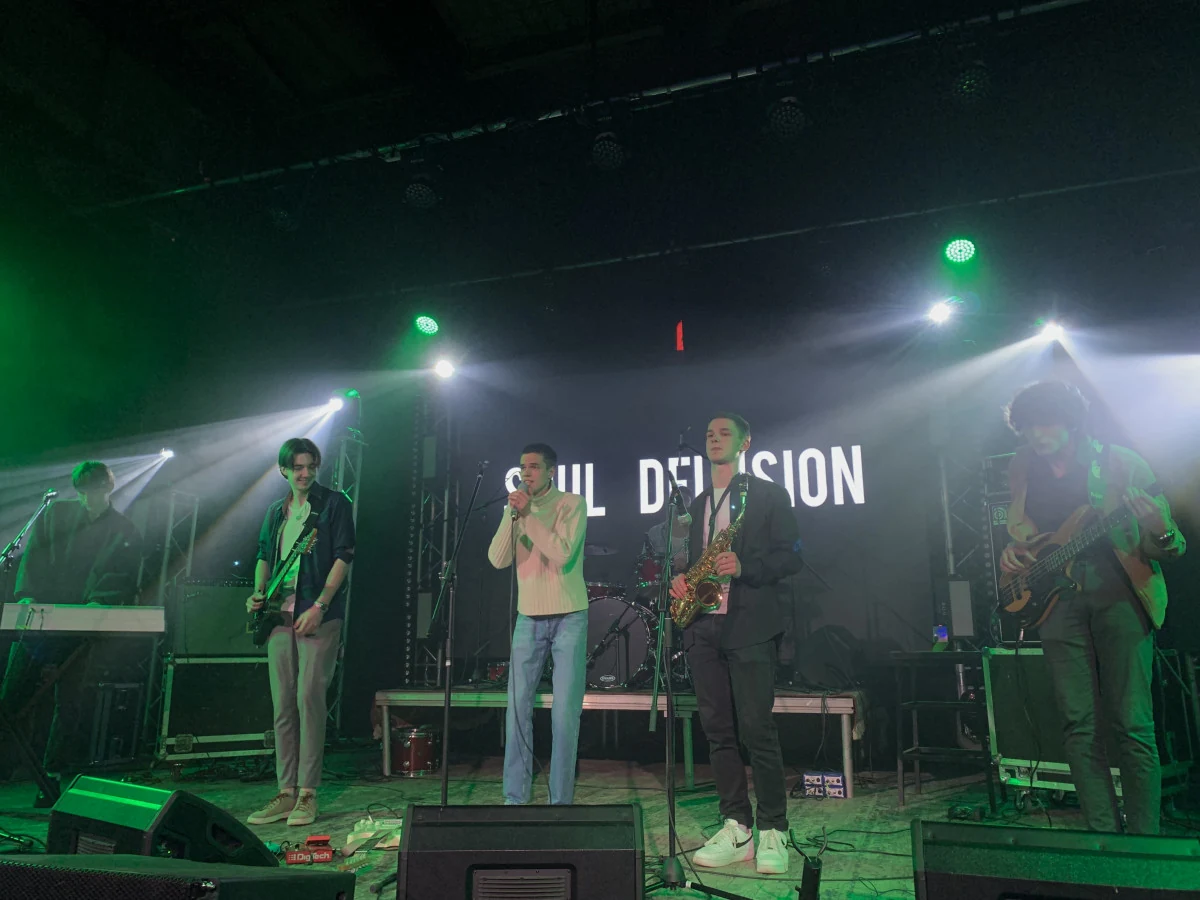
My curatorial work brought contemporary art, music, performance and conversation together within a shared experience. The exhibition and music programme offered different ways of sensing the same historical moment: through image, sound, bodily presence and collective attention. I was interested in how these encounters forge new connections between independent communities, how personal experience enters public discussion, and how culture retains the ability to speak in its own voice during war.
Solidarity took a concrete form in this project: pooling spaces and resources, supporting artists, and enabling them to continue working and meeting their audiences. Each edition sought to sustain cultural life under conditions that disrupted it daily. For me, Na Chasi became an experience of collective action — evidence of Ukrainian culture’s ability to organise itself, create new ways of living together and imagine a future even amid profound uncertainty.
Andrii Siguntsov — curator of the art and music programmes, art director and lead organiser.
A return to shared cultural life after the liberation of the Kyiv region, through music, contemporary art and solidarity between independent communities.
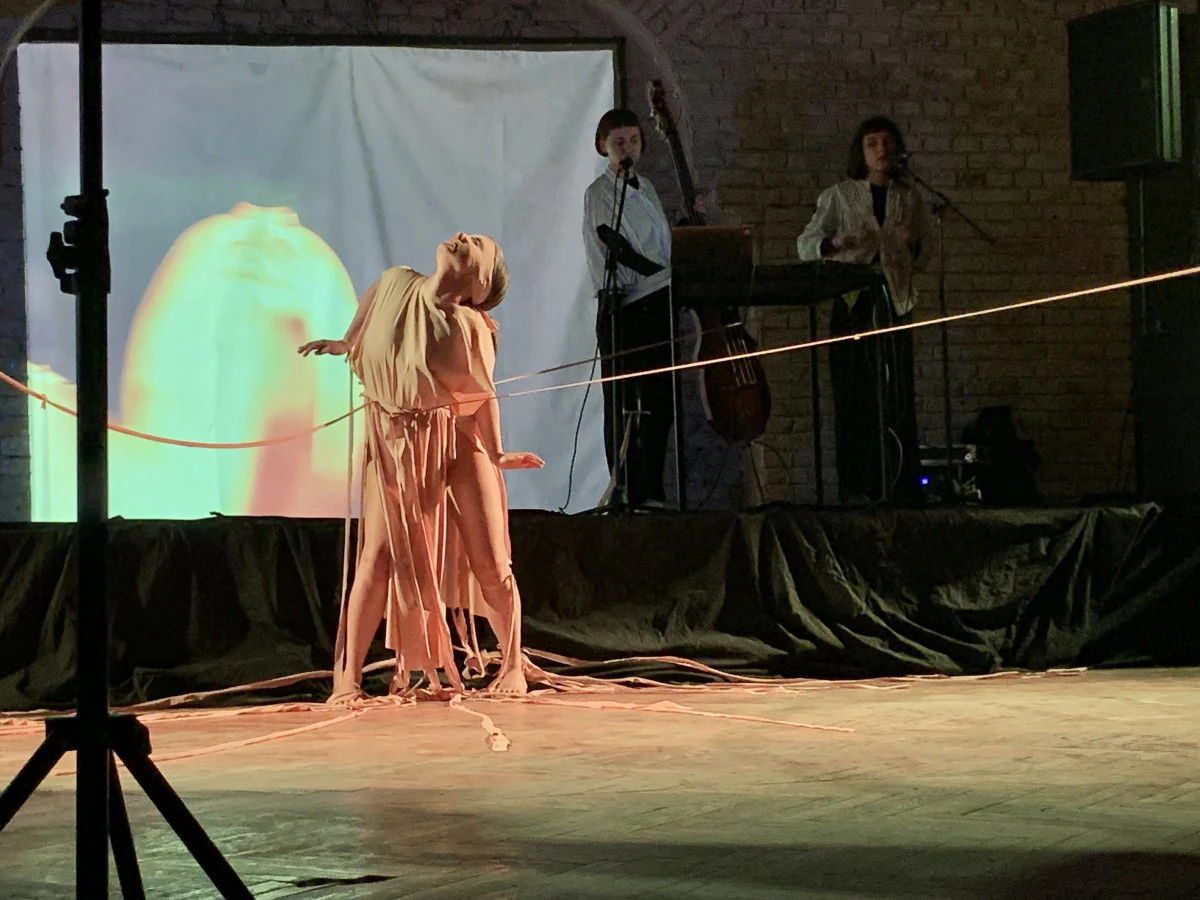
“ne/na chasi” questions the very possibility of postponing art until better times. Video art, installations, interventions and performances restore a public dimension to personal experience, creating a space for encounter after isolation and danger.
New ways of seeing and listening: digital art, NFTs and VR alongside experimental music and independent scenes.
The exhibition brings together contemporary artists’ work, digital media and wartime posters. Moving between physical space, NFTs and virtual experience, it considers how the viewer’s presence and ways of engaging with art are changing.
Cultural independence as the capacity to shape one’s own images, memory and future through art, music and public discussion.
The exhibition deliberately brings together images that seem incompatible: the experience of birth, gender-based violence, humanism and the demonisation of the enemy. This emotional dissonance unsettles habitual perception and questions what independence means as the ability to define one’s own position in the present.
Art as a witness to war: painting, photography, media art and performance in dialogue with the city’s music communities.
Painting, photography, sculpture and performance turn the factory into a meeting place for different artistic languages. The works address the inner experience of war through faces, bodily action and digital reinterpretations of pain.
Personal and collective memories of war through painting, video art and musical experimentation.
Personal memories of war, childhood trauma and the search for one’s roots meet explorations of historical memory and urban space. The exhibition considers the artistic image as a way to work through experience and retain the capacity to act without reducing oneself to the position of a victim.
“Unity of Spirit”: independent communities come together to reflect on the body, identity and the freedom to be different.
Embodiment, queerness and women’s experiences shape an exhibition spanning installations, painting, objects, collage, photography and video art. The works explore sexuality, the search for and rethinking of femininity, and shifts in Ukrainian identity during war, considering visibility and diversity as part of a shared cultural experience.
Connections between generations in contemporary culture: Odesa video art, the new pop scene, performance and young poetry.
Video art from the collection of the Museum of Odesa Modern Art meets artistic interventions and live improvisation by the DAKH School. The exhibition connects generations and historical layers of art, opening earlier works to new readings through bodily presence, sound and the festival space.
Artists
Uta Kilter·Oleksandr Roitburd·Ihor Husiev·Myroslav Kulchytskyi·Oleksandr Shevchuk·Vadym Chekorskyi·Yan Bachynskyi·Aliona Tokovenko·DAKH School
The final edition explores war and the end of globalisation as we knew it, through contemporary art, a performance by {liniyi} and three music stages.
The exhibition addresses the end of globalisation as we knew it: war disrupts economic ties and transforms our understanding of the world’s interdependence. The artists’ works connect these far-reaching changes with personal experiences of loss, materiality and the search for new connections.
Artists
Zhanna Kadyrova·Roman Mykhailov·Vasia Dmytryk·Vitalii Kravets·Vitryna·Go.Ra·V. Chekhuta·Dmytro Voitovych·Vladyslav Cherepovskyi·Tse Ya Nikita